PATTERNS
Quilts
Signed Copies - Dispatched 8 May 2025
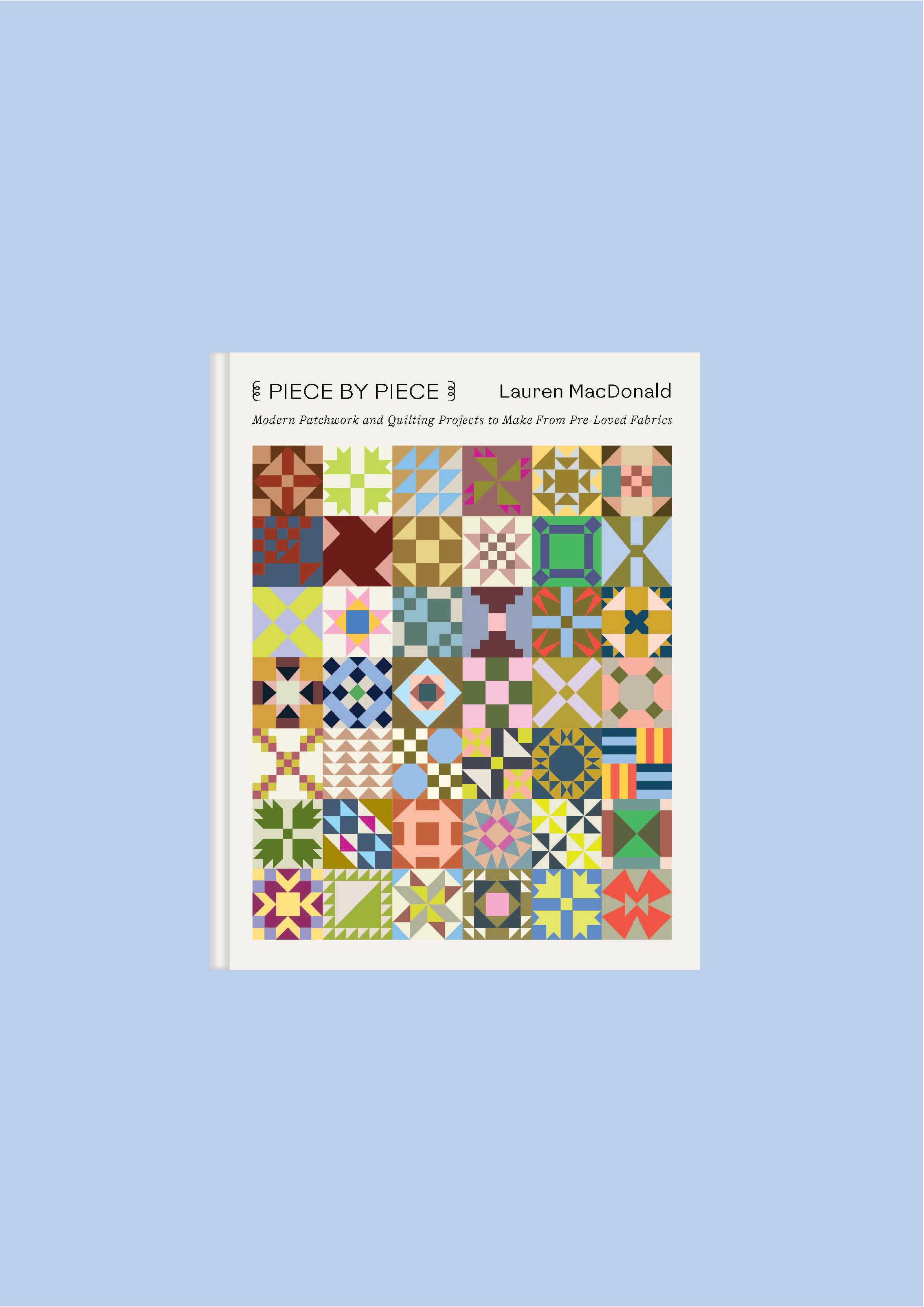
Piece by Piece: 20 modern patchwork and quilting projects to make from preloved fabrics is a hands-on craft book complete with patterns, tutorials and projects that use a mix of quilting, patchwork and appliqué. Designer, maker and founder of textile studio Working Cloth, Lauren MacDonald shares her enthusiasm for and knowledge of quilting with approachable warmth and humour in this indispensable guide to modern patchwork and quilting.
A homage to tradition with a contemporary aesthetic, Piece by Piece offers heritage quilt patterns in a fresh, modern colour palette. The 20 projects, all designed to be made with second-hand fabrics and scraps from other projects, are simple enough for the beginner and advanced enough to keep experienced makers interested. Each of the three sections – kids and baby, homewares, and clothing and accessories – is organised in a skill-building sequence, with smaller, simpler projects at the beginning and more challenging ones towards the end. Beautifully illustrated, the step-by-step guides detail how to make a kid's and women's jacket, quilts, cushions and bolsters, a patchwork party hat and teddy bear, and more.
A manual to be treasured and leafed through for years to come, Piece by Piece encourages you to repurpose and reuse – a practice quilters have been following for centuries that now feels both timeless and timely.

I came across this pattern as the “Enigma Square” in Nancy Cabot’s (real name, Loretta Leitner Rising) weekly quilting column in the Chicago Tribune, which ran from 1933 - 1948. According to the article’s tag line the Enigma Square pattern creates a “puzzling effect”, which looks much more complicated to put together than it really is!
The block is a variation on a four patch, and in Cabot’s version it was repeated again and again to create diagonal “domino”- like lines down the quilt. For the Working Cloth version, I’ve spun the blocks at 90 degrees to create a central square instead.
Have a play with the blocks (domino is a game after all) and see what works for you! For best results, read the instructions thoroughly before you begin, work slowly and methodically, and always, always press your seams.
Skill level: Advanced Beginner / Intermediate. A great second project if you’ve done another quilting project before.
1 cm (3/8”) seam allowance is included in the pattern.
SUITABLE FABRICS
Many fabrics can be used for quilting, though some are easier to work with than others. If you are a beginner, try mid-weight cotton or linens of a plain weave. Fabrics should be woven, not knitted, and shouldn’t have any stretch. Mid-weight fabrics provide some stability — heavy ones will create bulky seams and light ones are more likely to shift while sewing. If you are re-purposing fabrics from your home, bed sheets, pillowcases, button-down shirts, and lightweight trousers all make good quilt material. As you become more confident, experiment with different textures and fibres.
YOU WILL NEED
- Sewing Thread - Basting Thread - Hand Quilting Thread (I recommend Sashiko Thread or Perl 8 Cotton) - Hand Quilting or Sashiko Needles - A Thimble - Tailor’s Chalk or Quilting Pencil - Quilting Ruler (or straight edge and measuring tape/ruler) - Scissors or Rotary cutter - Pins - Iron - Binding - Wadding - Painter’s tape (optional) -
56 cm zip (Cushion only)
Sizes: Cushion, Cot, Throw, Single, Double

In quilt making, the ‘sash’ or ‘sashing’ refers to the strips of material used to separate blocks. This pattern uses plain blocks, but you could easily replicate this technique with appliqué or patchwork.
If you are working with fabrics that you already have, it can be made from different fabrics with contrasting colour values. Just separate your fabrics into ‘light’ and ‘dark’ piles, cut following the pattern and sew together. This takes a bit more time, but the results are lovely, and there is very little waste. This pattern will go over both methods.
For best results, read the instructions thoroughly before you begin, work slowly and methodically, and always, always press your seams.
Skill level: Beginner
1 cm seam allowance is included in the pattern.
SUITABLE FABRICS
Many fabrics can be used for quilting, though some are easier to work with than others. If you are a beginner, try mid-weight cotton or linens of a plain weave. Fabrics should be woven, not knitted, and shouldn’t have any stretch. Mid-weight fabrics provide some stability — heavy ones will create bulky seams and light ones are more likely to shift while sewing. If you are re-purposing fabrics from your home, bed sheets, pillowcases, button-down shirts, and lightweight trousers all make good quilt material. As you become more confident, experiment with different textures and fibres.
YOU WILL NEED
- Sewing Thread - Basting Thread - Hand Quilting Thread (I recommend Sashiko Thread or Perl 8 Cotton) - Hand Quilting or Sashiko Needles - A Thimble - Tailor’s Chalk or Quilting Pencil - Quilting Ruler (or straight edge and measuring tape/ruler) - Scissors or Rotary cutter - Pins - Iron - Binding - Wadding - Painter’s tape (optional) -
Sizes: Cot, Throw, Single, Double & Queen.
Smocking

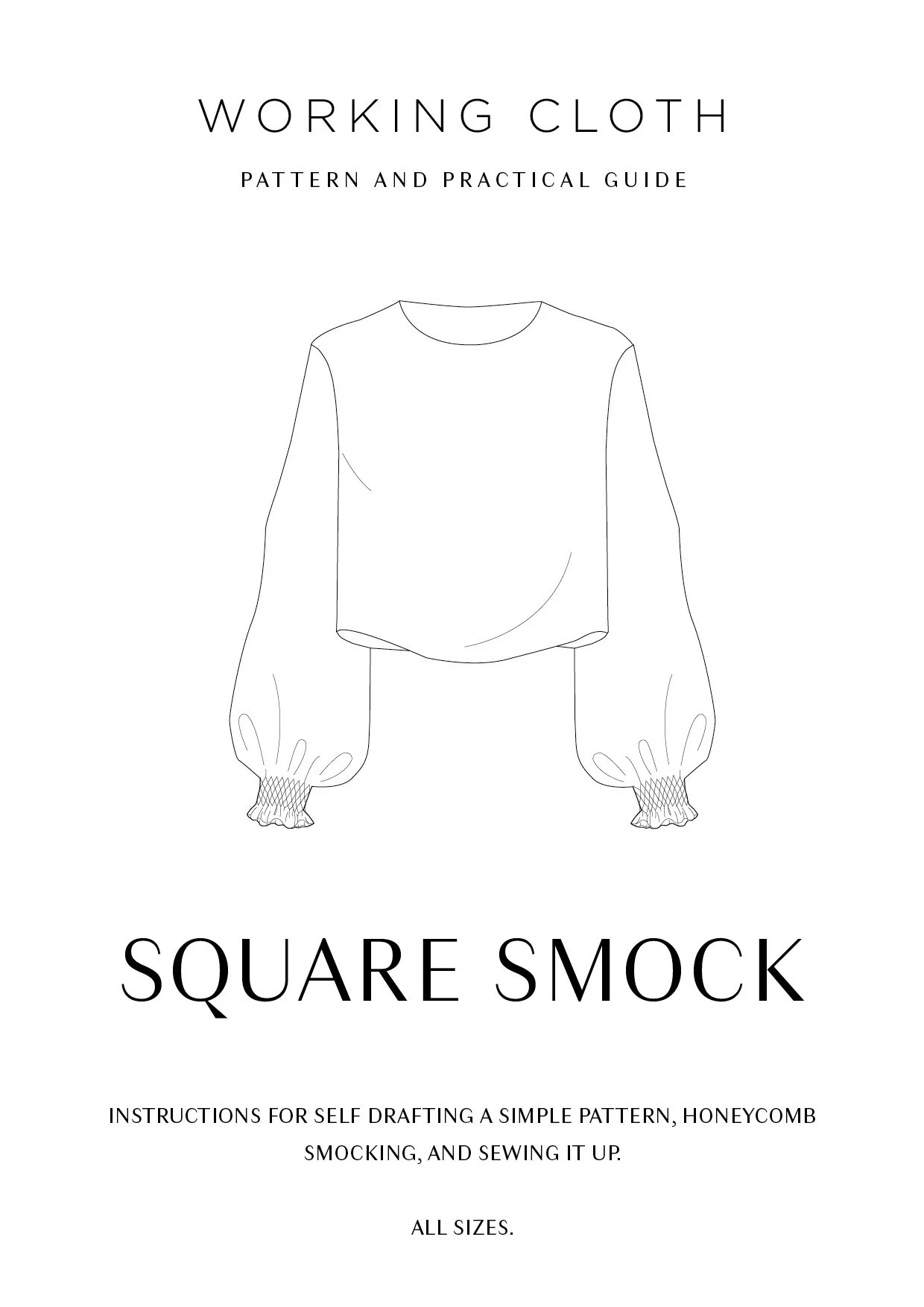
A guide to make a simple smocked top. It includes instructions on taking your measurements, planning your design, costing out your fabric, making your garment, hand pleating, honeycomb smocking, and finishing your piece.
Alterations include: Adding a skirt, making the top A-line, adding a bust dart, and incorporating more smocking.
Suitable fabrics include: Lightweight fabrics like cotton poplin, lawn, shirting, organdy, muslin, seersucker, tencel, silk charmeuse, organza.
Fabrics that are stiffer will create a more dramatic silhouette than fabrics that have a soft drape. For instance, a rigid cotton shirting will look more boxy and structured than a floaty Tencel.
Consider how you want the finished garment to hang on your body and your personal preference for clothing.
Using fabrics that you have: This project would suit bedsheets or an embroidered tablecloth nicely. A children's version could be made from a pillowcase or a set of tea towels.
Smocking can also be used to add detail and adjust the fit of existing garments.
Ginghams and Checks: If using a checked fabric you can skip the step of marking your pleats and use the lines on the fabric instead.
Instructions are in metric and imperial.
Full size templates to accompany Piece by Piece: 20 modern patchwork and quilting projects to make from preloved fabrics.
You’ll receive a .zip file with pdfs to print in both A4 and US Letter format for the following projects:
ABC Soft Blocks
Ellie Quilt
Patchwork Party Hat
Patchwork Bear
Toadstool Jacket
Clare Quilt
Isobel Tote Bag
Rose Dress
Notes:
Remember to print the files single-sided and at 100% scale. To check that you’ve printed the right size, use a ruler to measure the 1” or 1 cm square on the project pages.
If the project has pattern pieces that run over multiple pages, use the layouts included in the pdf downloads to help you align your pieces and match up adjoining lines.
If you have any questions, please get in touch: info@workingcloth.com